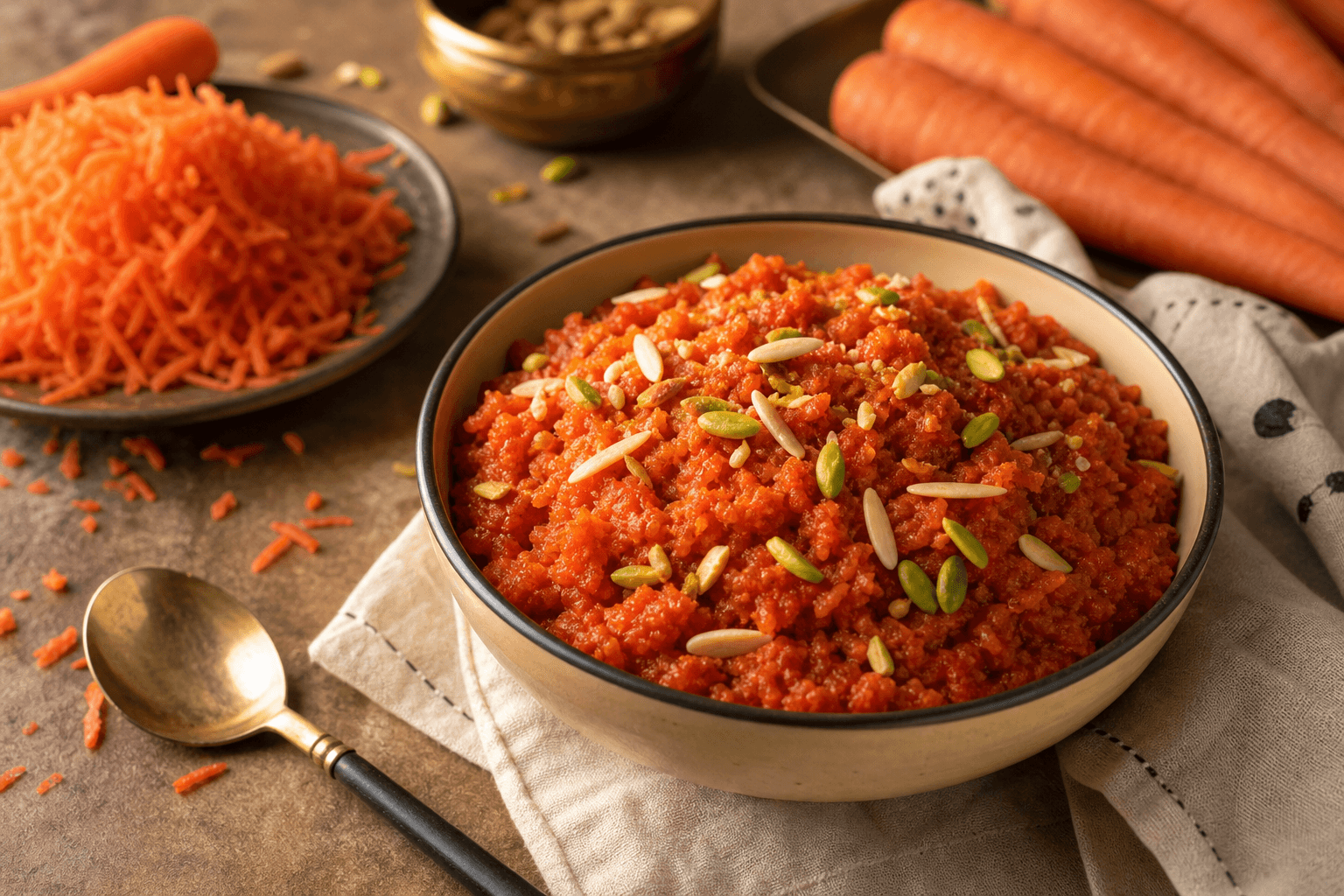
For a rich gajar ka halwa, cook grated carrots slowly with milk until the milk has nearly disappeared, then add sugar, ghee, cardamom, and optional khoya or mawa. The finished halwa should be soft and moist but not runny, with tender carrots, a clean dairy aroma, and only a light sheen of ghee.
This Punjabi-style carrot halwa recipe works for an everyday dessert or a festive family batch. Cooking time changes with the carrots, pan width, and amount you prepare, so the visual cues below matter more than a fixed number of minutes.
Ingredients for Two Batch Sizes
Use the smaller batch for about 4 to 6 modest servings and the larger batch for about 10 to 12 servings. The final yield depends on how far you reduce the milk and how generously you serve it.
| Ingredient | Small batch | Family batch | What it does |
|---|---|---|---|
| Fresh carrots, grated | 1 kg | 2 kg | Provides body, colour, sweetness, and carrot flavour. |
| Whole milk | 1 litre | 2 litres | Softens the carrots and creates a creamy base. |
| Ghee | 3 tablespoons | 6 tablespoons | Adds nutty aroma and a smooth finish. |
| Granulated sugar | 150 to 180 g | 300 to 360 g | Sweetens the halwa after reduction. |
| Ground cardamom | 1/2 teaspoon | 1 teaspoon | Adds a fragrant finish. |
| Khoya or unsweetened mawa, crumbled | 150 g, optional | 300 g, optional | Adds dairy depth and a denser texture. |
| Chopped almonds, pistachios, or cashews | 40 g | 80 g | Adds texture and a festive finish. |
The sugar range lets you adjust for carrot sweetness. Begin at the lower end if you prefer a less sweet dessert. For more on how ghee, milk solids, cardamom, and other ingredients shape Indian sweets, see this guide to Indian sweet ingredients.
Choose the Right Carrots Before You Start
Fresh, firm carrots are suitable for gajar ka halwa, and no special variety is required. Ordinary orange carrots produce a dependable result; seasonal red carrots can give deeper colour and a naturally sweeter flavour when fresh and juicy.
- Orange carrots: Choose firm carrots with a clean smell and no soft spots. They may need more reduction if they contain more water.
- Red carrots: These can create a darker, traditional-looking halwa. Their moisture still varies, so follow the milk-reduction cues.
- Grating size: Medium or large shreds retain texture. Fine shreds soften faster but can create a smoother, wetter mixture.
Wash and peel the carrots if the skins are tough. Trim the ends and grate evenly so the strands cook at the same rate.
Choose Slow Cooking or a Faster Method
A wide-pan stovetop method gives the most concentrated flavour and control over texture. A pressure cooker or covered shortcut saves time, but an uncovered reduction stage is still essential.
| Method | Best for | Texture and flavour | Main caution |
|---|---|---|---|
| Wide-pan stovetop | Traditional results and larger batches | Deeply integrated flavour with tender strands | Needs regular stirring as milk reduces. |
| Pressure cooker shortcut | Busy days or softer halwa | Very tender carrots, with less initial concentration | Finish uncovered in a wide pan. |
| Covered saucepan | Small batches when time is limited | Soft and moist, but less concentrated | Uncover once carrots are tender. |
For a quicker small batch, pressure-cook the grated carrots with 250 ml of water for 1 minute at high pressure, then allow a natural release for 10 minutes before releasing any remaining pressure according to your appliance instructions. Transfer the softened carrots to a wide pan, add the 1 litre of milk, and reduce uncovered for about 25 to 40 minutes before adding sugar and finishing the recipe. This method softens the carrots efficiently, but the flavour is usually less concentrated than with slow cooking because the carrots spend less time reducing with the milk.
For a celebration, slow cooking is easier to control because you can stop at a firm, spoonable consistency. For a quicker dessert, use the pressure cooker only to soften the carrots, then reduce the mixture without a lid.
Prepare the Carrots and Dairy
Grate the carrots, measure the milk and sugar, crush the cardamom, chop the nuts, and crumble the khoya or mawa before turning on the stove. The recipe moves quickly once the milk has reduced.
Use a heavy, wide pan if possible. Its broad base encourages evaporation and gives the carrots room to cook evenly. A thin or crowded pan increases the chance of scorching.
Cook the Halwa Until the Texture Changes
Follow the stages below instead of relying only on the clock. For the small batch, the stovetop process commonly takes about 45 to 75 minutes. Wetter carrots and larger batches can take longer.
1. Sauté the carrots in ghee
Warm the ghee over medium heat, add the grated carrots, and stir for 5 to 8 minutes. The carrots should lose their raw smell, soften slightly, and become glossy without heavy browning.
2. Add the milk and soften the carrots
Pour in the milk and bring it to a gentle simmer. Cook uncovered, stirring every few minutes at first and more often as the liquid drops.
The carrots should become tender enough to press with the back of a spoon. The milk will change from a loose liquid to a thick coating. Do not add sugar yet, because sugar draws water from the carrots.
3. Add sugar after the milk has nearly reduced
When only a small amount of milk remains and the carrots are soft, stir in the sugar. The mixture will loosen as the sugar releases moisture. Continue cooking uncovered until the spoon leaves a brief trail and no pool of milk remains.
4. Finish with cardamom, khoya, and nuts
Stir in cardamom near the end. Add crumbled khoya or mawa during the final 5 to 8 minutes, then fold in half the nuts and reserve the rest for the top.
The halwa is done when the carrots are tender, the mixture holds together on a spoon, and a light sheen of ghee appears at the edges. It should look moist and rich, not wet or oily.
Choose the Richness and Make Substitutions
Khoya and mawa are concentrated milk solids. They add dairy depth and a denser sweet-shop-style finish, but they are optional. A well-reduced carrot and milk mixture remains satisfying without them.
- No khoya or mawa: Leave it out and cook until the milk fully coats the carrots. The result will be lighter.
- Khoya versus mawa: These names are commonly used for reduced milk solids. Use an unsweetened version to retain control over sugar.
- Sweetened condensed milk: It adds body and considerable sweetness. Replace part of the sugar with a small amount, then taste before adding more.
- Dairy-free version: Use unsweetened full-fat plant milk and dairy-free cooking fat. The flavour will be less dairy-rich, and reduction time may change.
- Garnishes: Almonds, pistachios, and cashews are interchangeable. Raisins add sweetness, so use fewer with condensed milk.
Fix Watery, Dry, Burnt, or Overly Sweet Halwa
Most problems come from adding sugar too early, using a crowded pan, cooking at excessive heat, or stopping before the final reduction.
| Problem | Likely cause | Practical fix |
|---|---|---|
| Watery | Moisture released after sugar or early removal | Cook uncovered over medium-low heat until the spoon leaves a trail. |
| Dry or stiff | Over-reduction or aggressive reheating | Add a small splash of warm milk and loosen over low heat. |
| Burnt base | High heat, thin pan, or insufficient stirring | Transfer the unburnt upper portion to a clean pan. Do not scrape the bottom. |
| Firm carrots | Thick shreds, crowding, or insufficient milk-stage cooking | Add a little milk, cover briefly, then uncover and reduce. |
| Too sweet | Extra sugar or condensed milk | Fold in more unsweetened cooked carrots or dairy when practical, then reduce. |
| Pooled ghee | Over-finishing or excess ghee | Stop cooking and stir. A slight shine is desirable; pooled ghee is not. |
Serve, Store, and Reheat It Well
Gajar ka halwa is most aromatic when warm. At room temperature it becomes firmer, while chilled halwa is denser and less fragrant but convenient for make-ahead serving.
Top it with chopped pistachios or almonds just before serving. Add garnishes after reheating so they retain their texture.
Cool leftovers promptly, place them in a shallow covered container, and refrigerate them. Follow a current food-safety timetable for refrigerated cooked leftovers, and discard the halwa if it develops an off odour, unusual appearance, or other signs of spoilage. For the best texture, freeze only if you have a suitable tested storage method for this dessert, since freezing can change its dairy texture.
Reheat gently in a saucepan or microwave, stirring once or twice. If firm, add a teaspoon or two of milk per portion and warm slowly. Reheated halwa may be slightly denser than freshly cooked halwa.
Homemade Halwa or Punjabi Sweet-Shop Style?
Homemade gajar ka halwa lets you control sugar, softness, dairy richness, and garnish. A Punjabi sweet-shop version is prepared for consistent portions and presentation, so it may be denser and more uniform than a home batch.
Super Punjab Sweet House is a Punjabi sweet shop at 31940 South Fraser Way in Abbotsford, British Columbia. Its official menu describes vegetarian Punjabi sweets and savory snacks prepared fresh daily, but it does not confirm current gajar ka halwa availability.
If you prefer to buy the dessert, judge it by tenderness, aroma, moisture, and the absence of a greasy or stale finish. This guide to gajar halwa texture and freshness explains the key checks.
Gajar Ka Halwa Questions
Can I make gajar ka halwa without khoya or mawa?
Yes. Omit it and reduce the carrots and milk until the mixture is thick, tender, and no longer watery. The result will be lighter but still rich if you sauté the carrots in ghee and reduce the milk fully.
Are orange carrots suitable for gajar ka halwa?
Yes. Orange carrots work well and are widely available. Red carrots can produce deeper colour and different sweetness, but freshness and moisture matter more than colour.
Can I make gajar ka halwa in a pressure cooker?
Yes. For the small batch, pressure-cook the grated carrots with 250 ml of water for 1 minute at high pressure, then allow a 10-minute natural release. Transfer the carrots to a wide pan, add the milk, and reduce uncovered for about 25 to 40 minutes before adding sugar. Follow your appliance instructions for releasing any remaining pressure. This is faster, while slow stovetop cooking usually gives more concentrated flavour.
How long does homemade gajar ka halwa keep?
Cool it promptly, keep it covered in the refrigerator, and follow a current food-safety timetable for refrigerated cooked leftovers. Discard it if it develops an off odour, unusual appearance, or other signs of spoilage. Reheat only the portion you plan to serve.
Why did my gajar ka halwa turn watery after adding sugar?
Sugar draws moisture from the carrots, so the mixture naturally loosens. Cook it uncovered over medium-low heat until the liquid reduces and the halwa leaves a brief trail behind the spoon.
For a dependable homemade result, focus on three transitions: tender carrots, nearly absorbed milk, and a final mixture that is moist but holds together. If you would rather compare a prepared Punjabi sweet with your home batch, ask Super Punjab Sweet House about current sweet availability before visiting.
- gajar
- ka
- halwa
- recipe