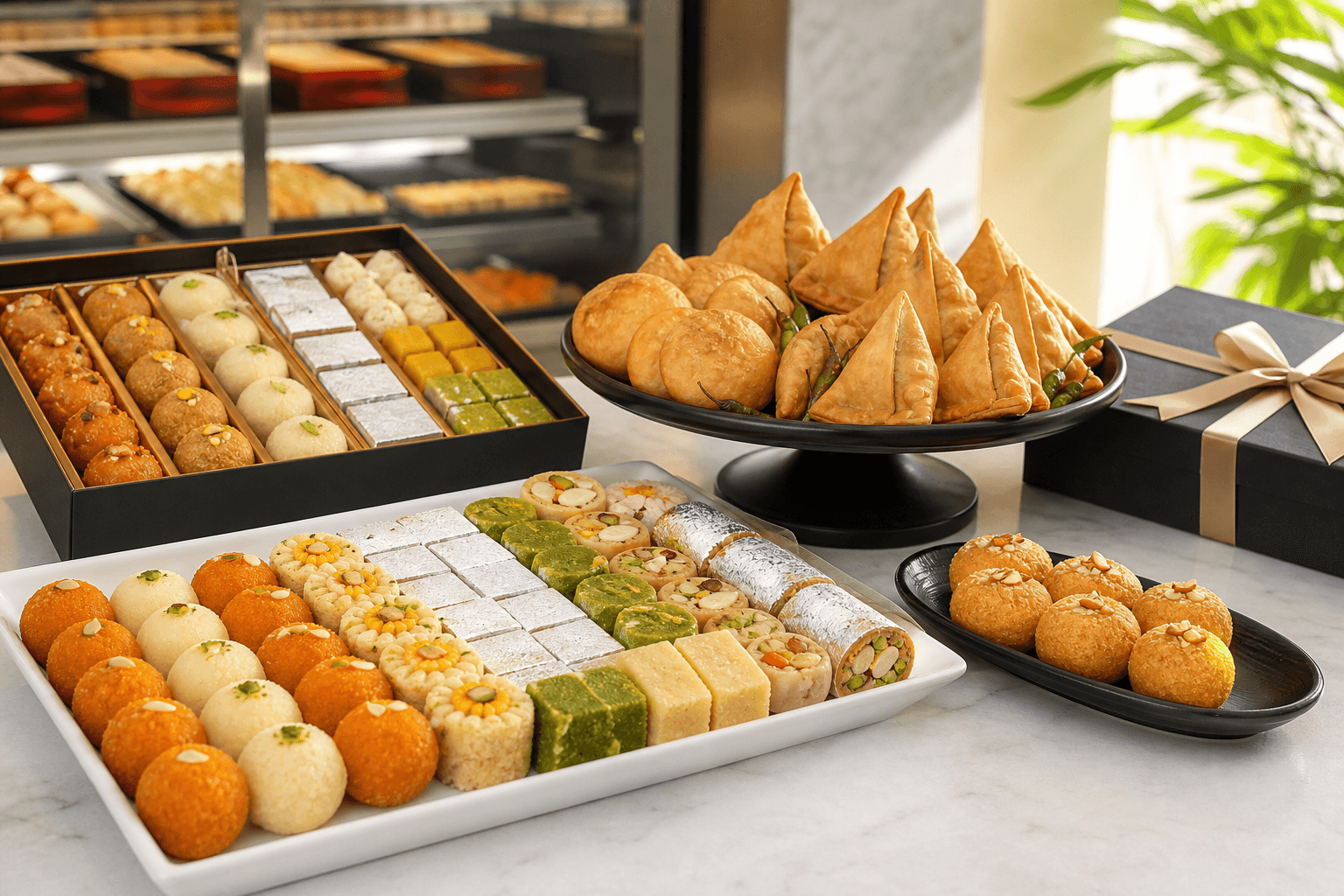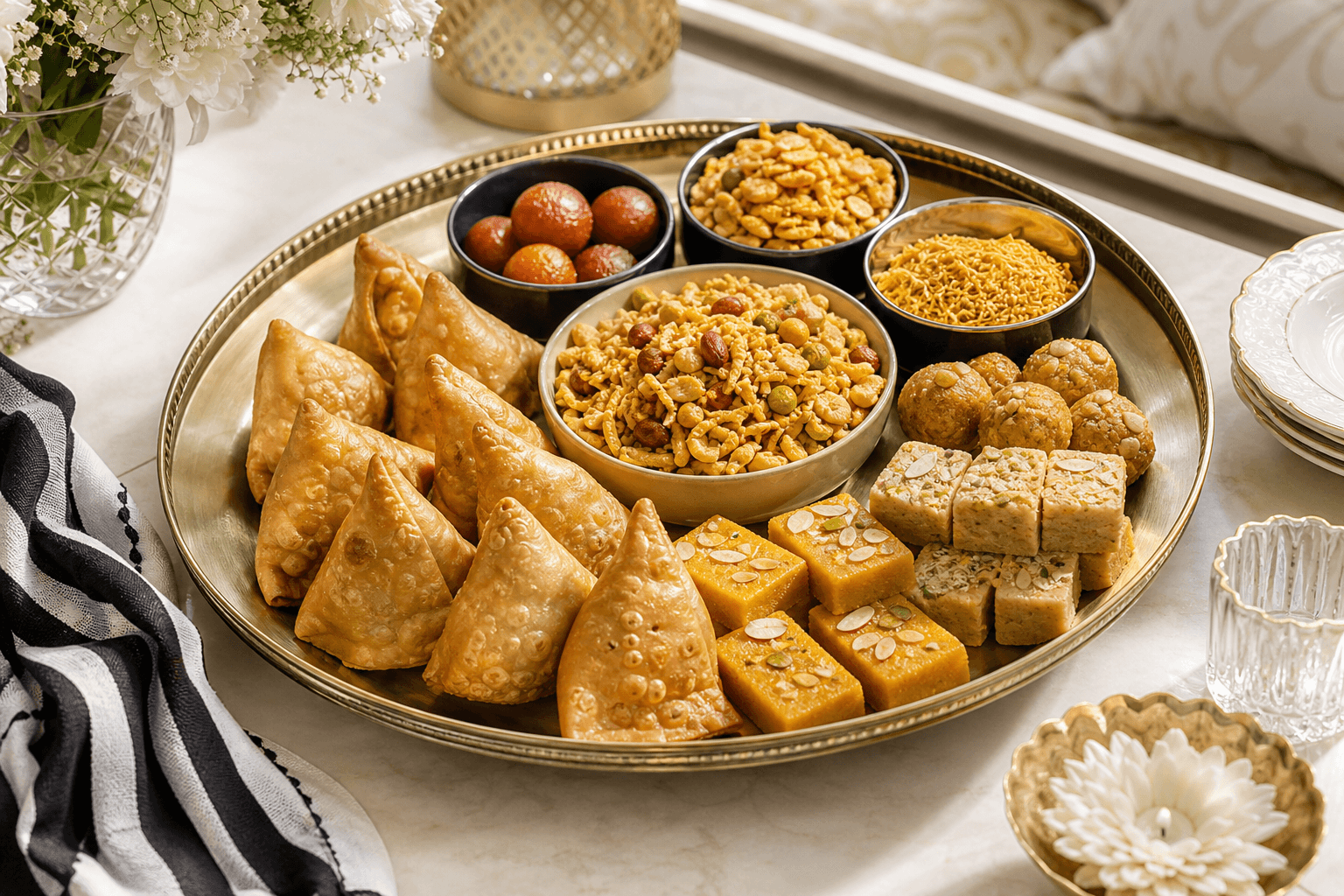
For a Punjabi party snack tray, choose savory snacks when guests need substantial finger food, sweets when the tray is a dessert or gift, and a mixed assortment when it must cover the whole gathering. Start with about two to three savory pieces per guest for a light snack, or three to five when snacks replace a meal, then add one to two small sweet portions per guest and adjust for the event and other food available. Related reading: Taco party platters toronto.
In Abbotsford, Super Punjab Sweet House offers a 100% vegetarian selection of Punjabi mithai, samosas, and chaat prepared in fresh daily batches. The right order depends less on choosing every popular item and more on giving each food a clear role at your event.
Choose the tray format before choosing individual items
Decide whether your tray is meant to start a meal, replace a meal, finish a celebration, or give guests a little of everything. That decision prevents a sweets-heavy order from being used as dinner or a savory assortment from leaving a birthday table without dessert.
| Format | Best for | What to include | Main trade-off |
|---|---|---|---|
| Savory-only | Receptions, tea service, short meetings, and gatherings where a meal follows | Samosas, pakoras, chaat-style items, and other Punjabi savories | Easy to serve and filling, but it does not provide a dessert course |
| Sweets-only | Festive gifting, dessert tables, religious offerings, and celebrations with a separate meal | A mix of dry, soft, and syrup-based mithai | Simple presentation, but some guests may expect a savory snack |
| Balanced mixed tray | Family parties, birthdays, open-house gatherings, and informal celebrations | Samosas or other savories paired with two or three contrasting sweets | More variety requires clearer labeling, separation, and replenishment |
Use this quick decision rule: if a full meal is already planned, choose a light savory tray or a sweets-only assortment. If guests will graze for one to two hours, choose a balanced spread. If snacks are the main food, increase the savory portion and treat sweets as an optional finish.
For more ideas about arranging a shared Punjabi spread, see what belongs on a Punjabi snack platter.
Build variety across Punjabi textures and flavors
A satisfying tray changes texture as guests move through it. Pair a crisp or flaky savory item with a soft sweet, then add a dry mithai and a syrup-based option if the event calls for more variety.
Start with one dependable savory anchor
Samosas work well as the recognizable centerpiece of a savory or mixed tray. The published menu lists samosas, along with chaat and other Punjabi foods. Ask which items are available for your date instead of assuming every option is prepared for every order.
Add contrasting mithai
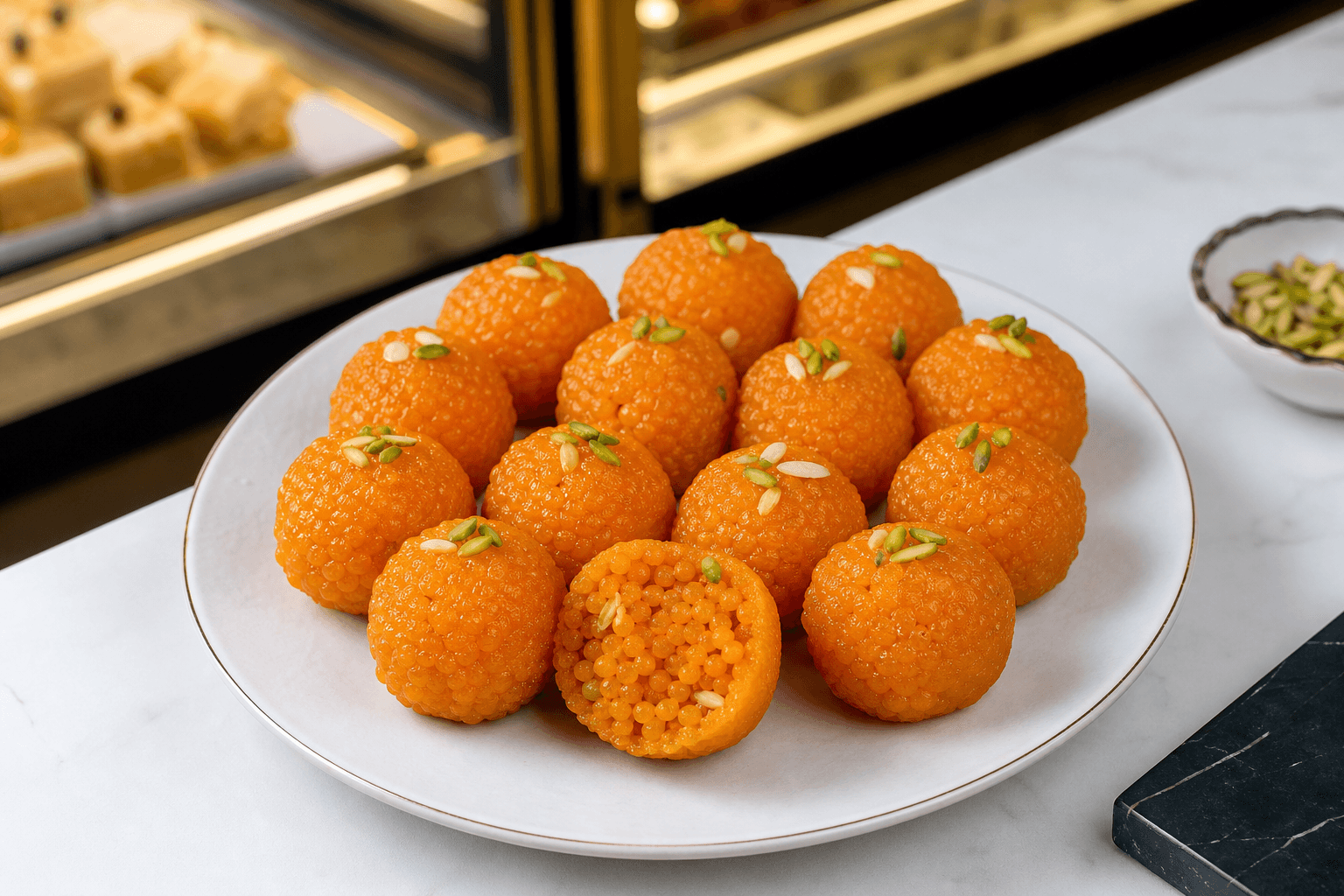
For a mixed tray, choose two or three sweet styles instead of several items with the same texture. Gulab Jamun brings a soft, syrup-based finish; Jalebi adds a crisp, syrup-coated contrast; Kaju Barfi offers a firm, sliceable option; and a mixed sweets assortment gives guests broader choice.
Rasmalai is better treated as a moist dessert serving than as a dry tray item. Keep it in its own container or serving dish, separate from crisp samosas and dry mithai. Chaat should likewise be handled separately or assembled close to serving time.
A useful mixed spread has three roles: one recognizable savory, one or two sweets with different textures, and one optional moist or syrup-based item. For additional savory selection ideas, compare these Punjabi savory snack options.
Plan portions by guest count and serving purpose
The following figures are planning rules of thumb, not confirmed tray capacities or a quote from the shop. Use the lower end when a meal is served and the higher end when the snack spread is the main refreshment.
| Guests | Light savory service | Substantial snack service | Sweets-only service | Balanced mixed spread |
|---|---|---|---|---|
| 10 | 20 to 30 savory pieces | 30 to 50 savory pieces | 10 to 20 small sweet portions | 20 to 30 savory pieces plus 10 to 15 sweet portions |
| 20 | 40 to 60 savory pieces | 60 to 100 savory pieces | 20 to 40 small sweet portions | 40 to 60 savory pieces plus 20 to 30 sweet portions |
| 30 | 60 to 90 savory pieces | 90 to 150 savory pieces | 30 to 60 small sweet portions | 60 to 90 savory pieces plus 30 to 45 sweet portions |
For example, a 20-person family gathering with a meal afterward could begin with 40 to 60 savory pieces and 20 to 30 small sweet portions. A 20-person open-house event without a planned meal needs the higher savory range, with sweets added according to how long guests will graze.
Count children, non-snackers, and guests who will eat a full meal separately. For a formal event, small portions across more varieties often work better than one large item count. For a casual gathering, fewer varieties in larger quantities are easier to replenish and serve.
Match the tray to the occasion
The same guest count can require a different order depending on how people will eat. Use the occasion to decide whether presentation, portability, variety, or fullness matters most.
Birthdays and family gatherings
A balanced tray is usually the most flexible choice. Use samosas or another savory anchor for guests arriving hungry, then add a dry or sliceable mithai and a familiar syrup-based sweet. If children are attending, keep some items mild and serve spicy chutneys or toppings separately.
Festivals and religious gatherings
Choose a sweets-only assortment when mithai is the central offering or savory food is being prepared elsewhere. A mixed assortment can work when guests will share snacks before or after a meal. Ask about ingredients and presentation requirements in advance.
For gifting or a festival table, a varied mithai selection can be easier to distribute than a tray designed for immediate grazing. These festival sweet mix ideas can help separate individual gifts from shared portions.
Office events
For an office gathering, choose foods that can be picked up without complicated plating. A savory-first order with clearly separated sweets works well for mixed preferences. Provide napkins, small plates, serving tongs, and labels, especially for guests unfamiliar with Punjabi sweets.
A short break needs a lighter order, while an open lunch or staff celebration needs more substantial portions. For office-specific format decisions, use this guide to choose corporate catering snacks.
Religious functions and formal celebrations
For a formal gathering, prioritize consistent portioning, clear ingredient information, and easy distribution. Dry mithai is simpler to package and pass around than syrup-based sweets, while samosas and chaat may need separate containers to protect texture and presentation.
Use a ready-made assortment or request a tailored mix
A ready-made assortment is practical when you want a predictable category mix and a quick decision. It suits hosts who know the guest count but do not need to control every flavor or ingredient.
A tailored request is more useful when the event has mixed dietary needs, formal presentation, a separate dessert course, or a specific balance between sweets and savories. Provide the event details and ask what current options can meet them. Include guest count, food role, preferred categories, items to avoid, packaging needs, and pickup or delivery.
Ask the right ingredient and dietary questions
A 100% vegetarian menu does not answer every ingredient or allergy question. Ask about each item and state any allergy or dietary restriction before confirming the order.
- Which sweets contain dairy, khoya, milk, ghee, or other milk ingredients?
- Which items contain cashews, almonds, pistachios, or other nuts?
- Which savory items and sweets contain wheat or gluten?
- What ingredients are used in the samosa filling, chutneys, sauces, and chaat toppings?
- Can the shop identify suitable choices for a particular restriction?
- How will items be packaged and labeled?
Share the reason for the restriction clearly. A preference, religious requirement, intolerance, and diagnosed allergy can require different handling questions, so do not rely on “vegetarian” as a complete allergy statement. This overview of vegetarian snack ideas can help you decide which foods belong on the table.
Set up the tray to protect texture and presentation

Keep crisp foods, dry sweets, moist sweets, and sauced items in separate groups. Samosas lose their texture beside condensation or syrup, while rasmalai and chaat need containers that prevent leaking and are easy to serve.
Use small serving dishes for chutneys and toppings instead of pouring them over the entire tray. Place tongs or serving spoons beside each category, label unfamiliar sweets, and replenish food in smaller batches.
Keep moist sweets and prepared chaat protected, and ask the shop about suitable handling before serving.
Set the savory section closest to plates and napkins, place dry mithai where guests can see the variety, and keep syrup-based items on a stable surface.
Use this ordering brief before contacting the shop
A complete inquiry helps a local sweet shop tell you what is realistic for the date. Copy this list into your notes:
- Event: occasion, date, serving time, and whether a meal is planned.
- Headcount: guests, approximate children, and whether people will graze or sit for a meal.
- Format: savory-only, sweets-only, or balanced mixed assortment.
- Food categories: samosas, other savories, chaat, dry mithai, soft sweets, or syrup-based sweets.
- Dietary questions: dairy, nuts, wheat, gluten, vegan needs, allergies, and ingredient labeling.
- Presentation: individual portions, shared containers, trays, labels, and separate chutneys.
- Logistics: pickup or delivery, collection window, packaging, and budget range.
- Confirmation: current menu, availability, quantity, total price, preparation timing, and payment details.
Ask about timing as soon as you know the event date, particularly for a larger or tailored order. The published website describes online ordering, pickup, and delivery. Confirm whether delivery is available for your address.
Questions to settle before placing a party tray order
How many samosas or savory pieces should I order per guest?
Plan two to three savory pieces per guest for light service and three to five when snacks replace a meal. Reduce the amount if a full meal follows and increase it when guests will graze for several hours.
Should I choose a sweets-only tray or a mixed Punjabi snack tray?
Choose sweets-only for gifting, dessert, a festival offering, or a gathering with savory food already covered. Choose mixed when guests need an arrival snack and sweet finish from the same spread.
How far ahead should I ask about a custom party snack tray in Abbotsford?
Ask as soon as you know the date, guest count, and food role. The shop needs to confirm current availability, preparation timing, packaging, and pickup or delivery details for your order.
Can a 100% vegetarian tray still contain dairy, nuts, or wheat?
Yes. A vegetarian tray can still contain dairy, nuts, wheat, gluten, or other ingredients. Ask about each item and state any allergy or dietary restriction before confirming the order.
How should I serve samosas and syrup-based sweets on the same tray?
Keep them in separate containers or clearly divided sections. Serve samosas with chutneys on the side, and place syrup-based sweets in leak-resistant dishes so moisture does not soften savory items.
Plan your Punjabi party tray in Abbotsford
Start with the event’s purpose, calculate a realistic portion range, choose a savory, sweet, or mixed format, and write down every ingredient and logistics question before ordering. Super Punjab Sweet House is located at 31940 South Fraser Way in Abbotsford and offers Punjabi sweets and savory snack ordering information for checking current options, availability, pickup, and delivery details.