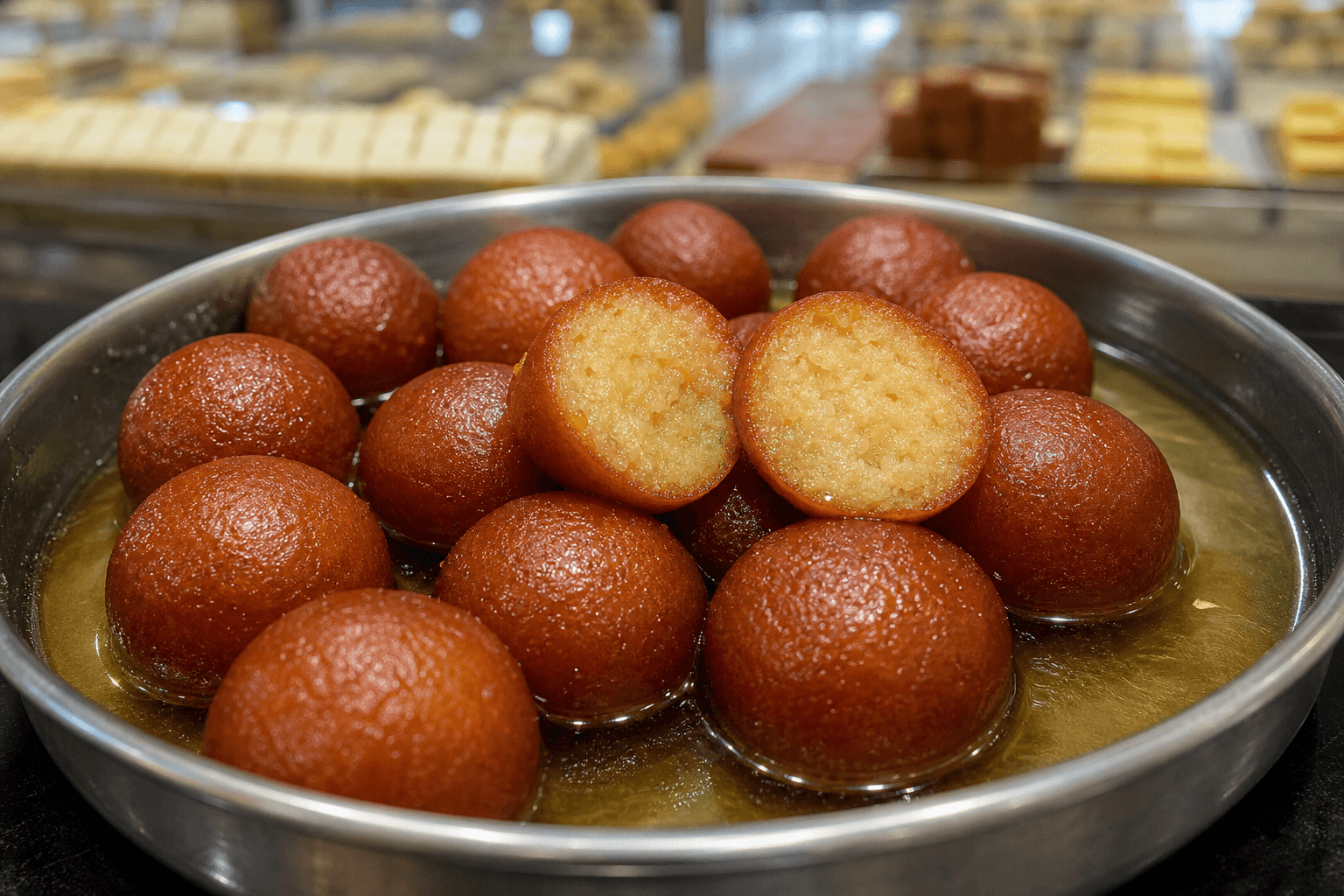
Good Gulab Jamun should be evenly cooked, soft and slightly spongy, well infused with syrup, and free from stale or unusual aromas. You do not need specialist equipment to make a sensible buying decision. A careful look, a gentle bite, and a taste of one piece can reveal whether the sweets are fresh and properly prepared.
These are practical quality checks, not a formal certification standard. Size, shade, sweetness, and firmness can vary between recipes, but certain problems are difficult to overlook, including a hard centre, dry crumb, burnt flavour, strange odour, or a sweet that collapses because it has absorbed too much syrup.
Quick summary: The checks that matter most

- Look for a reasonably even shape, intact surface, and consistent browning without obvious scorching.
- Expect a soft, tender, slightly spongy centre that still holds its shape.
- Check that syrup has reached the middle rather than coating only the outside.
- Pause if you notice burnt, sour, rancid, chemical, or stale aromas or flavours.
- For a large celebration order, ask to check a sample and confirm preparation and packing details first.
What should good Gulab Jamun look like?
Start with the overall appearance. A well-prepared piece is generally rounded or evenly formed, with a surface that remains intact after frying and soaking. Minor differences in size or shape are normal, particularly when sweets are made by hand, so visual uniformity does not need to mean identical pieces.
Colour is also a matter of degree. Gulab Jamun can range from golden brown to a deeper brown depending on the recipe and frying process. Darker colour is not automatically a defect, but blackened patches, obvious scorching, collapsed sides, or widespread cracking deserve closer attention. For more context on choosing Gulab Jamun locally, see these Gulab Jamun buying considerations in Abbotsford.
Look at the surface as well as the colour. A slightly porous surface can be consistent with syrup absorption, while a visibly dry, heavily wrinkled, or damaged exterior may suggest that the sweet has been held too long or handled poorly. Appearance alone cannot prove freshness, so use it as the first check rather than the final decision.
Check the texture and centre

Texture is one of the most useful Gulab Jamun quality indicators. The ideal balance is tender and slightly spongy, with enough structure to lift the piece without it breaking apart. When you bite into it, the centre should feel moist and soft rather than dense, hard, rubbery, or powdery.
A hard centre may indicate that the dough was too firm, the piece was not cooked or soaked appropriately, or the sweet has dried out. A dry crumb that absorbs little syrup is another concern. These problems can exist even when the outside has an attractive brown colour, which is why cutting or tasting a sample is more informative than judging the surface alone.
There is also a limit to softness. A Gulab Jamun that disintegrates immediately, feels excessively heavy, or has no structure may be over-saturated or poorly handled. The useful target is a soft but cohesive bite, not maximum wetness.
Look for thorough syrup absorption
Syrup gives Gulab Jamun much of its characteristic juiciness and sweetness. The piece should not feel dry in the middle while syrup pools only around the outside. When you cut one open, the interior should show that the syrup has travelled through the centre rather than stopping at the surface.
The relationship between frying, soaking, syrup concentration, hardness, and juiciness is well established in food research. Research on Gulab Jamun soaking and texture explains that syrup concentration can affect hardness, juiciness, and overall acceptability.
Light coating is not necessarily a problem if the centre is still pleasantly moist and the recipe is intentionally less sweet. However, a dry interior is a warning sign. At the other extreme, excessive syrup can make the piece collapse, become difficult to handle, or taste overwhelmingly sweet. Ask whether the batch is intended to be lightly soaked or fully syrup-infused if the consistency matters for your occasion.
Use aroma and taste to catch quality problems
Fresh Gulab Jamun should have a clean, appealing aroma associated with its ingredients and syrup. Depending on the recipe, you may notice dairy, ghee, cardamom, rose, or other familiar sweet-making notes. The exact aroma will vary, but it should not smell stale or unpleasant.
Be cautious if a piece has a burnt, sour, rancid, chemical, or machine-oil-like smell or taste. A strong off-note is not simply a difference in regional style. It is a reason to stop, ask when the batch was prepared, and request clarification or another sample rather than accepting a large quantity without checking.
Taste should also feel balanced. Gulab Jamun is meant to be sweet, but sweetness should not completely hide a burnt exterior, stale flavour, or unpleasant aftertaste. If the outside tastes bitter while the centre is acceptable, the frying may have been inconsistent. If the centre tastes flat and dry, syrup absorption or holding conditions may be the issue.
Gulab Jamun quality checks at a glance
| What to observe | What it may indicate | What to check or ask |
|---|---|---|
| Even shape and intact surface | Careful forming and handling | Are minor differences limited to size, or are pieces cracked and collapsed? |
| Golden to deep brown colour | Normal recipe or frying variation | Are there blackened patches or a burnt smell? |
| Soft, slightly spongy centre | Tenderness with enough structure | Does a sample hold together when lifted and bitten? |
| Moist interior | Syrup has reached the centre | Is the middle dry, or is the piece so saturated that it falls apart? |
| Clean, familiar aroma | More confidence in freshness and flavour | Do you notice sour, stale, rancid, chemical, or oily notes? |
| Balanced sweetness and flavour | Ingredients and syrup work together | Is the taste pleasant beyond the initial sweetness? |
Questions to ask before buying for a celebration
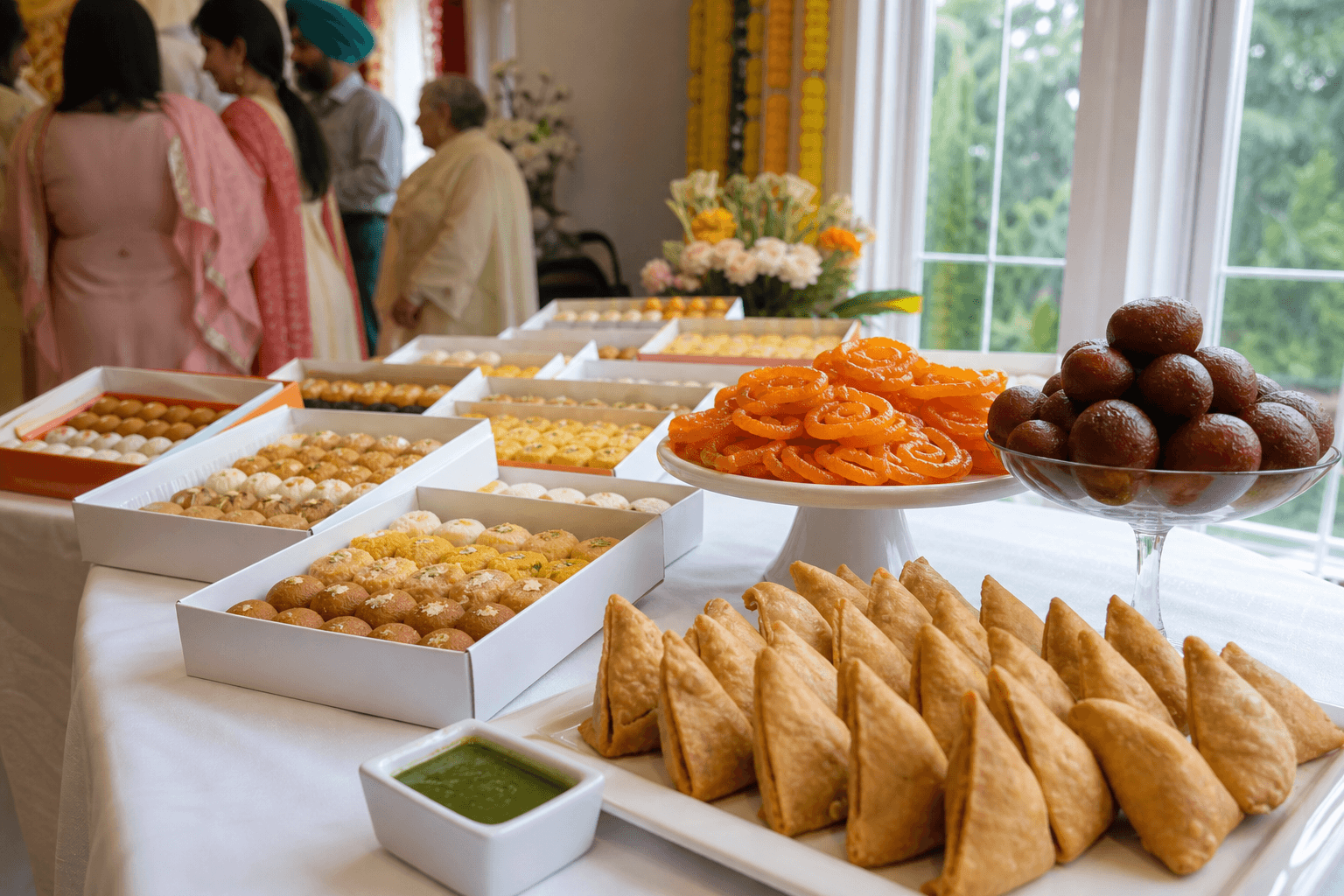
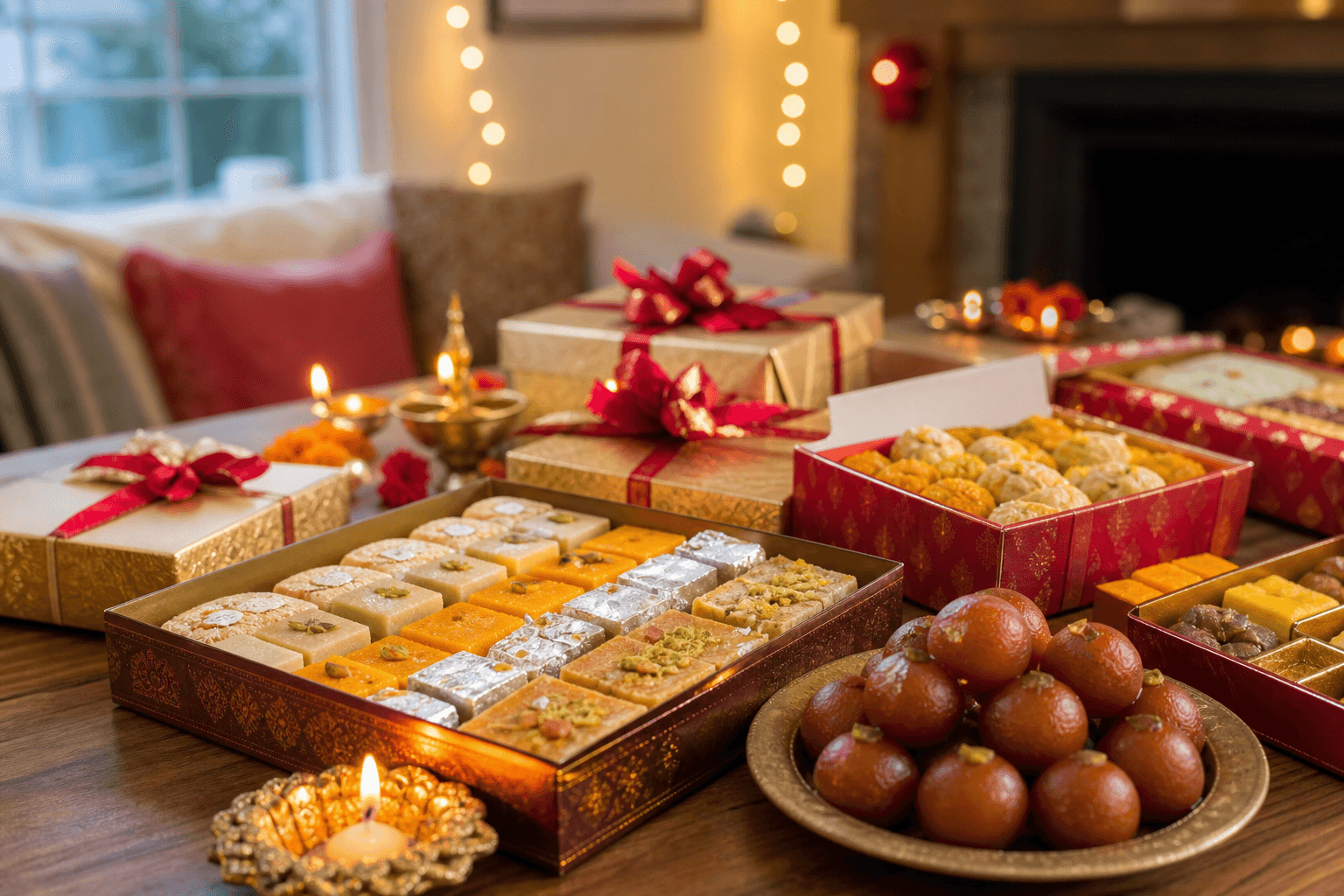
Buying a few pieces for yourself is different from buying for a festival, family gathering, or other special occasion. A small sample check can prevent you from discovering a texture or flavour problem after receiving a large order.
- When was this batch prepared? Ask for a clear answer about the batch you are considering.
- Can I taste or inspect a sample? Check the centre, syrup absorption, aroma, and structure before confirming a larger quantity.
- How will the sweets be packed? Confirm that the container will protect the pieces from crushing and hold the syrup securely.
- How much advance notice is needed? Larger quantities may require planning, so ask about the current process.
- What are the pickup or ordering arrangements? Confirm current details, timing, and quantity before paying.
If the sweets will travel, sit on a dessert table, or be packed into individual portions, firmness and packaging may matter more than they would for immediate eating. The right choice is not necessarily the wettest or softest option, but the batch that remains appealing and intact in your planned setting.
Applying these checks when choosing Punjabi sweets in Abbotsford
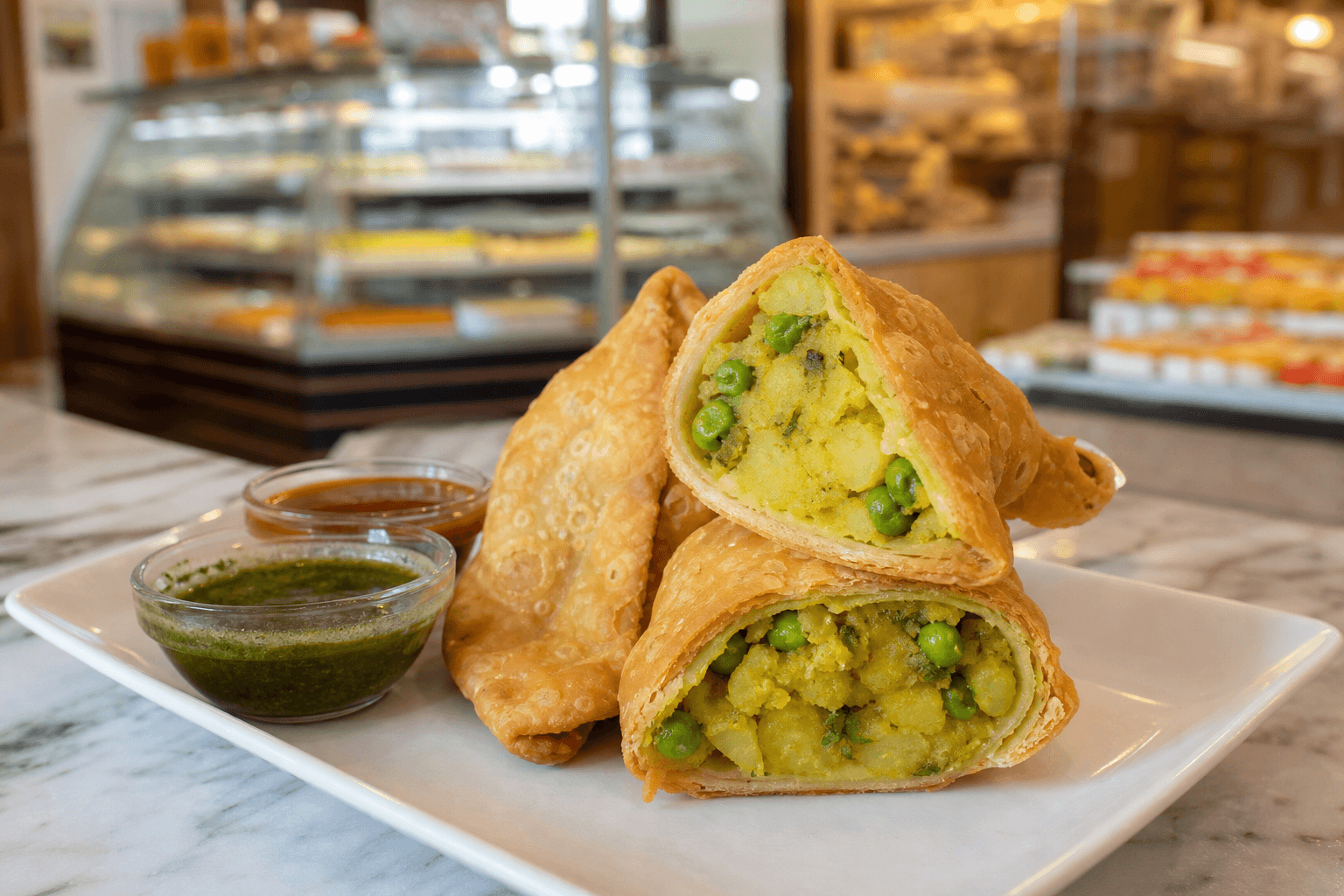
Super Punjab Sweet House is a local sweet shop at 31940 South Fraser Way in Abbotsford, British Columbia. Its website describes a 100% vegetarian selection of Punjabi mithai and savory snacks, including Gulab Jamun and samosas, with fresh daily preparation, traditional family recipes, and quality ingredients.
Those are useful factors to consider when comparing Punjabi sweets, especially if vegetarian preparation and traditional flavour matter to you. They do not replace your own sensory check of a particular batch. Use the appearance, texture, syrup, aroma, and taste criteria above, and ask the shop to clarify any detail that affects your celebration or purchase.
For readers exploring the wider range of Punjabi sweets and Gulab Jamun traditions, the same principle applies: understand the style you want, then assess the actual product for freshness, structure, and flavour rather than relying on appearance alone.
Frequently asked questions
Can Gulab Jamun be good if its colour is darker than usual?
Yes. Gulab Jamun can naturally vary from golden brown to a deeper brown depending on the recipe and frying process. Dark colour becomes concerning when it comes with blackened patches, a bitter or burnt flavour, or a burnt smell.
Why is the centre hard even when the outside looks right?
The outside can brown attractively while the centre remains dense or dry. Possible factors include dough consistency, cooking, soaking, or holding conditions. Cut and taste a sample rather than relying on the exterior.
How can I check quality before placing a large event order?
Ask when the batch was prepared, request a sample if available, and check the centre for softness, structure, and syrup absorption. Also confirm packing, quantity notice, and current pickup or ordering arrangements.
Should Gulab Jamun be fully soaked in syrup or only lightly coated?
There is room for preference and recipe variation. The important point is that the centre should not be dry, while the piece should still hold its shape and avoid an unpleasantly heavy or oversaturated texture.
Conclusion: choose Gulab Jamun with confidence
The most reliable approach is to assess several signs together. Look for even cooking and an intact surface, then check for a soft but structured centre, syrup that reaches the middle, and a clean aroma and balanced taste. Normal differences in colour or size are less important than hardness, dryness, scorching, strange odours, or excessive fragility.
If you are buying for a celebration, taste or inspect a sample before confirming a larger quantity and ask practical questions about the batch and packing. In Abbotsford, explore the vegetarian Punjabi mithai offered by Super Punjab Sweet House at 31940 South Fraser Way and use these checks to make an informed choice.